






Introduction
Android still runs the majority of smartphones on the planet, and that single fact shapes almost every mobile strategy decision a business makes in 2026. Whether you are a startup founder shipping your first MVP, a CTO scaling an enterprise mobility program, or a product manager rolling out a fintech or healthcare app, the platform you cannot afford to get wrong is Android. That is exactly why so many companies choose to hire dedicated Android developers rather than treat mobile as an afterthought handled by whichever generalist is free.
A dedicated Android developer is not just someone who can write Kotlin. They understand app architecture, background processing, offline-first data sync, Play Store compliance, and the performance trade-offs that decide whether your app feels instant or gets uninstalled after one bad experience. As AI-powered features, on-device machine learning, and foldable and wearable form factors become standard expectations rather than novelties, the bar for Android engineering talent keeps rising.
This guide walks through everything a business needs to know before it hires dedicated Android developers: when to hire, what skills actually matter, how much it costs across different regions, how offshore hiring compares to building in-house, and the mistakes that quietly derail otherwise promising Android projects. It is written for decision makers, not for developers looking for their next job.
The stakes are higher than they used to be. Android now spans phones, tablets, foldables, Wear OS devices, and Android Automotive dashboards, which means the developers you hire today need to think in terms of adaptable, future-proof architecture rather than a single fixed screen size. Businesses that get this right early save months of rework later, and that is the core reason dedicated hiring has become the default approach for serious Android products rather than a nice-to-have.
Why Hire Dedicated Android Developers?
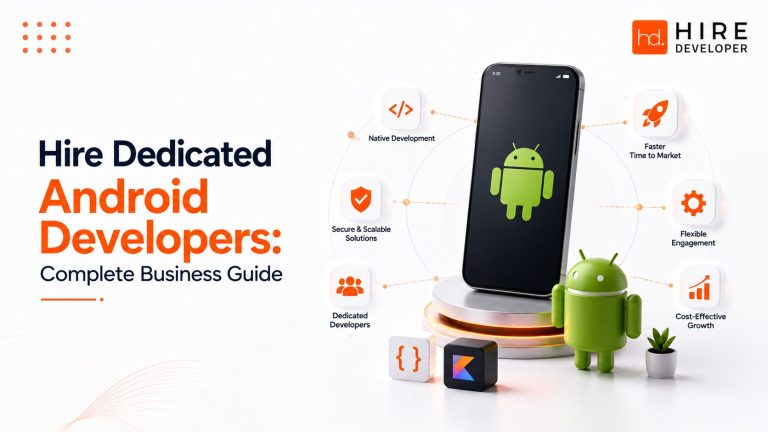
Hiring dedicated Android developers means bringing on engineers who work exclusively on your product, under your priorities, for as long as your roadmap requires. That distinction matters more than it sounds. A dedicated developer is not splitting attention across five client projects in a given sprint, and they are not disappearing the moment a contract ends. The business case comes down to six concrete advantages.
- Long-term ownership: A dedicated developer becomes genuinely accountable for the codebase, not just a single ticket. They understand why architectural decisions were made months earlier, which shortens every future debugging session.
- Predictable scalability: Need to add a second or third Android engineer as your roadmap grows? A dedicated hiring model lets you scale the team up or down without renegotiating a new vendor relationship each time.
- Higher code quality: Developers who are invested in a single product tend to write more maintainable code, document decisions better, and take testing seriously because they will be the ones maintaining it next quarter.
- Stronger productivity: Without constant context switching between unrelated client codebases, dedicated developers ship features faster and with fewer regressions.
- Knowledge retention: Institutional knowledge about your users, your architecture, and your edge cases stays inside the team instead of walking out the door when a contractor’s engagement ends.
- Better communication rhythm: Dedicated developers typically join your standups, sprint planning, and product discussions, which closes the gap between business intent and technical execution.
Quick Answer
Hiring dedicated Android developers gives businesses long-term code ownership, predictable scaling, and higher build quality compared to short-term freelance or one-off agency arrangements.
Dedicated Android Developers vs Freelancers vs Agencies
Businesses evaluating how to hire Android developers usually compare three models: dedicated hiring, freelance marketplaces, and full-service agencies. Each has a place, but they are not interchangeable, and picking the wrong one is one of the most expensive mistakes a growing company can make.
| Factor | Dedicated Developers | Freelancers | Agencies |
| Cost | Mid-range, predictable monthly rate | Lowest upfront, variable long-term | Highest, includes overhead and markup |
| Control | High, works inside your workflow | Low, limited oversight | Medium, filtered through account managers |
| Scalability | Easy to add developers on demand | Hard to scale reliably | Scalable but slower to mobilize |
| Code Quality | Consistently high, single codebase focus | Inconsistent across projects | Generally high but standardized, less custom |
| Communication | Direct, daily collaboration | Often async, timezone dependent | Layered through project managers |
| Long-term ROI | Strong, especially past 6 months | Weak for ongoing products | Moderate, cost-heavy over time |
For a short, well-defined task, such as fixing a single bug or building a small proof of concept, a freelancer can be the fastest route. For a product that will exist for years and evolve constantly, dedicated Android developers consistently deliver the best balance of cost, quality, and control.
When Should Businesses Hire Dedicated Android Developers?
The right time to hire dedicated Android developers is earlier than most founders expect. Waiting until the product is fully specified often means losing months to avoidable architecture mistakes. These are the situations where dedicated hiring pays off fastest.
- Startup MVP development: Getting Android architecture right from day one avoids expensive rewrites once the product finds traction.
- Enterprise applications: Internal tools and customer-facing apps at enterprise scale need developers who understand security, compliance, and integration with existing systems.
- Healthcare apps: HIPAA-adjacent data handling, offline access to patient information, and strict QA requirements call for experienced dedicated talent.
- FinTech products: Payment flows, biometric authentication, and regulatory reporting require developers fluent in mobile security best practices.
- Ecommerce apps: High-traffic checkout flows and push notification-driven engagement need performance-focused engineering.
- Logistics and delivery platforms: Real-time location tracking and offline-first functionality are core, not optional, features.
- Travel and hospitality apps: Complex booking flows and third-party API integrations benefit from developers who can own the full data pipeline.
- EdTech platforms: Video streaming, offline content, and multi-device sync all demand dedicated architectural planning.
- IoT and connected device apps: Bluetooth, NFC, and background service management are specialized skills most generalist developers lack.
Essential Skills Every Android Developer Should Have
When you hire an Android developer in 2026, Kotlin fluency is table stakes, not a differentiator. The developers worth hiring bring a broader stack of modern Android competencies.
Core Language and Framework Skills
- Kotlin as the primary language, with working knowledge of Java for legacy codebases
- Jetpack Compose for modern declarative UI development
- Android SDK and Android NDK for performance-critical native code
- Material Design principles for consistent, accessible UI and UX
Architecture and Data
- MVVM, MVI, or MVP architecture patterns depending on app complexity
- Room Database and SQLite for local persistence
- Offline-first app design, including sync conflict resolution
- REST API and GraphQL integration using Retrofit
Modern Tooling
- Coroutines and Kotlin Flow for asynchronous programming
- Dependency injection with Hilt, Dagger, or Koin
- Firebase for push notifications, analytics, and remote config
- Gradle build configuration and Android App Bundle optimization
DevOps and Delivery
- Git-based version control through GitHub or GitLab
- CI/CD pipelines for automated build, test, and release
- Play Console management, including staged rollouts and A/B testing
- Cloud integration with AWS, Google Cloud, or Azure for backend services
Quality and Security
- Unit and UI testing discipline, not just manual QA
- App security practices, including secure storage and certificate pinning
- Performance optimization for memory, battery, and startup time
It is also worth asking whether a candidate understands when native Android is the right call versus when Flutter or React Native cross-platform frameworks make more business sense. A developer who can make that trade-off honestly, instead of defaulting to their favorite tool, is a strong signal of engineering maturity.
Beyond individual skills, look for developers who can explain their reasoning in business terms. A candidate who can tell you why a particular caching strategy reduces server costs, or why a specific offline-sync approach improves retention in low-connectivity regions, is thinking like a product partner rather than just an implementer. That mindset is often a better predictor of long-term success than any single technical checkbox.
How to Hire Dedicated Android Developers
A structured hiring process is what separates companies that hire dedicated Android developers successfully from those that end up rehiring six months later. Here is the process that consistently produces strong outcomes.
- Define requirements clearly. Document the app’s core features, target Android versions, expected user load, and any regulatory constraints before you start interviewing.
- Screen for relevant experience. Look for candidates who have shipped apps in a similar domain, not just candidates with the right keywords on a resume.
- Run a technical screening. A short call focused on architecture decisions, not trivia, reveals more than a generic skills quiz.
- Administer a coding assessment. A scoped, realistic task, such as building a small feature with Jetpack Compose and Room, shows real working style.
- Conduct an in-depth technical interview. Cover architecture, testing philosophy, performance debugging, and how they handle ambiguous requirements.
- Evaluate soft skills and communication. Dedicated developers work closely with your product and design teams, so clarity and responsiveness matter as much as code quality.
- Run a paid trial project. A short, real deliverable is the most reliable way to confirm fit before committing to a longer engagement.
- Plan structured onboarding. Give new developers access to documentation, coding standards, and a clear first-week roadmap so they contribute quickly.
Hiring Checklist
- Requirements documented and shared before outreach
- Portfolio reviewed for domain-relevant apps
- Technical screening completed by a senior engineer
- Coding assessment scoped to real project needs
- Trial project completed and reviewed
- Onboarding plan ready before day one
How Much Does It Cost to Hire Dedicated Android Developers?
Cost is usually the first question business leaders ask, and it is also the one with the widest range of honest answers, because location, seniority, and engagement model all move the number significantly.
| Region | Monthly Rate (Dedicated) | Hourly Rate |
| India | $2,500 – $5,000 | $18 – $35 |
| Eastern Europe | $4,500 – $8,000 | $30 – $55 |
| Latin America | $4,000 – $7,000 | $28 – $48 |
| United Kingdom | $8,000 – $13,000 | $55 – $90 |
| United States | $10,000 – $16,000 | $70 – $120 |
These ranges reflect a mid-to-senior dedicated Android developer working full time on a single product. Several factors push the number up or down within each range.
- Seniority level: A senior architect commands significantly more than a mid-level implementer
- App complexity: Real-time features, offline sync, and native performance work all increase cost
- Engagement length: Longer commitments often unlock better monthly rates
- Team structure: A solo developer costs less than a full pod with a lead, QA, and backend support
- Compliance needs: Healthcare and fintech apps require additional security and testing investment
Ready to Get a Clear Quote?
HireDeveloper.dev connects businesses with vetted, dedicated Android developers across flexible engagement models. Explore current rates and available developers at https://hiredeveloper.dev/.
Offshore Android Developers vs In-House Teams
Offshore Android developers have become a mainstream option for businesses of every size, not just a cost-cutting move for large enterprises. The comparison below outlines where each model wins.
| Factor | Offshore Dedicated Team | In-House Team |
| Cost | 30-60% lower for comparable skill | Higher due to salary, benefits, office costs |
| Hiring Speed | Weeks, using an existing talent pool | Often months, especially for senior roles |
| Time-to-Market | Faster with an established process | Slower during ramp-up and hiring |
| Talent Access | Wide pool across regions | Limited to local market |
| Oversight | Requires clear process and communication | Easier day-to-day, same office or timezone |
| Long-term ROI | Strong when managed well | Strong but capital intensive |
The advantages of offshore hiring are real: significant cost savings, faster access to specialized skills like Jetpack Compose or Android NDK, and the ability to scale a team up quickly during a product push. The disadvantages are equally real if ignored: timezone coordination, communication overhead, and the need for stronger documentation practices. Businesses that succeed with offshore Android developers treat communication as a deliberate process, not an afterthought.
Explore Offshore Android Talent
HireDeveloper.dev connects US and UK businesses with experienced, vetted Android developers in India, combining offshore cost savings with dedicated-team accountability. See available developers at https://hiredeveloper.dev/.
Questions to Ask Before Hiring Android Developers
The right interview questions reveal far more than a resume ever will. Organize your evaluation around these categories.
Architecture
- How would you structure a new Android app using MVVM or MVI, and why?
- How do you decide between Jetpack Compose and the legacy View system for a given screen?
Testing and Quality
- What is your approach to unit testing versus UI testing in Android projects?
- How do you handle regression risk when shipping frequent releases?
Performance
- How would you diagnose a slow app startup time or a memory leak?
- What strategies do you use to keep an offline-first app responsive?
Security
- How do you securely store sensitive user data on-device?
- What is your process for handling authentication tokens and certificate pinning?
Problem-Solving and Communication
- Describe a time you had to push back on a product requirement for technical reasons.
- How do you communicate progress and blockers to a non-technical stakeholder?
Common Mistakes Companies Make When Hiring Android Developers
- Hiring on price alone: The cheapest developer is often the most expensive choice once rework and delays are factored in.
- Skipping the trial project: Portfolios show past work, not how someone performs inside your specific process.
- Ignoring architecture experience: A developer who has only maintained existing apps may struggle to make sound decisions on a greenfield project.
- Underestimating communication needs: Offshore and remote hiring without a clear communication cadence leads to slow feedback loops.
- No onboarding plan: Dropping a new developer into an undocumented codebase wastes their first few weeks of productivity.
- Overlooking security review: Treating app security as a final QA step instead of a design consideration creates costly rework.
- Hiring generalists for specialized needs: IoT, wearables, and Android Automotive projects need developers with direct experience in those areas.
Android Development Trends in 2026
Businesses hiring Android developers today need talent that keeps pace with where the platform is headed, not just where it has been.
- Jetpack Compose as the default: Compose has moved from emerging to expected, and most new projects now start Compose-first rather than treating it as optional.
- AI integration and on-device AI: Features like on-device inference, smart suggestions, and generative UI elements are becoming standard rather than experimental.
- Foldable device support: Adaptive layouts for foldables and large screens are now a real user segment, not a niche edge case.
- Wear OS development: Companion wearable experiences are increasingly expected for fitness, health, and productivity apps.
- Android Automotive: In-car Android experiences are opening a new category of specialized development work.
- 5G-driven experiences: Faster networks are pushing richer media, real-time collaboration, and lower-latency features into mainstream apps.
- IoT connectivity: Bluetooth Low Energy and Matter-compatible device integration continue to grow across smart home and health categories.
- Cross-platform versus native trade-offs: Flutter and React Native remain strong for speed to market, but native Android is still preferred where performance, deep OS integration, or long-term scale matter most.
None of these trends require you to rebuild your hiring strategy from scratch. What they do require is asking candidates forward-looking questions during the interview process, such as how they would approach a foldable-aware layout or where they see on-device AI fitting into your specific product roadmap. Developers who have already thought about these questions tend to be the ones actively keeping their skills current.
Why Businesses Choose HireDeveloper.dev
HireDeveloper.dev connects US and UK businesses with experienced, dedicated Android developers based in India, built around the hiring principles covered in this guide. Companies choose the platform for a few practical reasons.
- Access to pre-vetted dedicated Android developers with real Kotlin and Jetpack Compose experience
- Fast hiring timelines, often weeks rather than months
- Flexible engagement models, from a single developer to a full staff augmentation team
- Remote-first collaboration built around clear communication and reporting
- Enterprise-level support for larger, compliance-sensitive Android projects
The goal is straightforward: help businesses hire dedicated Android developers with less guesswork and fewer false starts.
See Available Android Developers
Browse vetted, dedicated Android developer profiles and start a conversation with HireDeveloper.dev at https://hiredeveloper.dev/.
Conclusion
Android is not slowing down, and neither is the bar for building on it well. Businesses that hire dedicated Android developers early, with a clear process and realistic budget expectations, consistently build faster, more secure, and more scalable apps than those that treat Android hiring as an afterthought. Whether you choose an in-house hire, an offshore dedicated team, or a hybrid approach, the fundamentals stay the same: define your requirements clearly, evaluate real architectural thinking, and prioritize long-term ownership over short-term cost savings.
If you are ready to hire dedicated Android developers who can own your product from architecture through App Store launch, HireDeveloper.dev can help you find the right fit quickly.
Start Your Hiring Search Today
Talk to HireDeveloper.dev about hiring dedicated Android developers for your next project at https://hiredeveloper.dev/.