






Introduction
DevOps best practices separate the teams shipping value every single day from the ones stuck in weekly release fire drills. As we move deeper into 2026 and 2027, the gap between elite performers and everyone else keeps widening, and it almost always comes down to how disciplined a team is about devops practices, automation, and culture.
This guide brings together proven DevOps best practices, the core devops framework, a step by step devops roadmap, the ci cd tools for devops that matter most, and honest numbers on devops engineer salary. Whether you are a founder evaluating devops consulting services, an engineering leader building a devops roadmap, or a developer trying to understand what a devops pipeline actually does, you will find practical, current guidance here.
What Is DevOps?
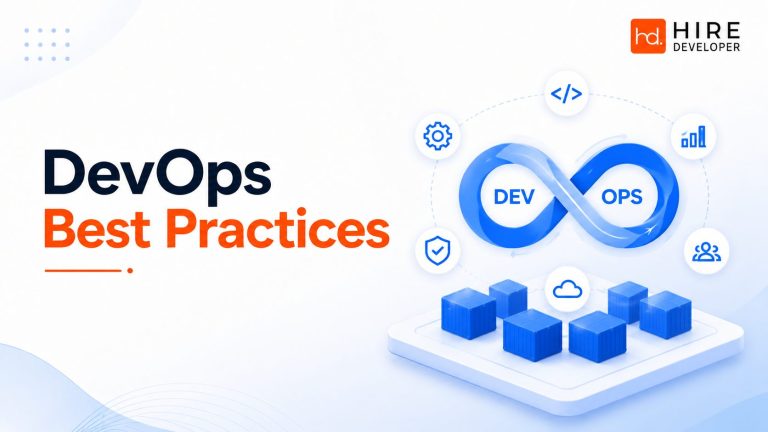
DevOps is a set of practices, culture, and tools that bring software development (Dev) and IT operations (Ops) together so teams can build, test, and release software faster and more reliably. Instead of development and operations working in separate silos, DevOps treats them as one continuous function responsible for the entire software lifecycle, from writing code to running it in production.
What Is a DevOps Pipeline?
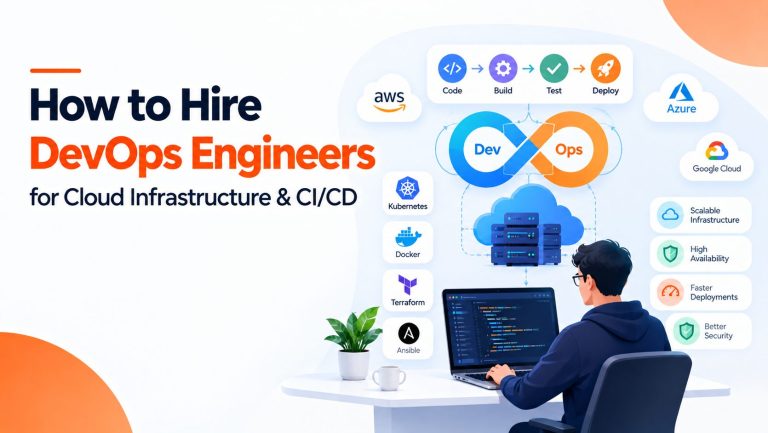
A devops pipeline is the automated sequence of steps that takes code from a developer’s commit all the way to production. It typically includes stages for building the code, running automated tests, scanning for security issues, and deploying to staging or production environments. The goal of a devops pipeline is to make releases fast, repeatable, and low risk without needing manual intervention at every stage.
Why DevOps Best Practices Matter in 2026-2027
Research from Google Cloud’s DORA program has consistently found that elite DevOps performers deploy code far more frequently and recover from incidents dramatically faster than low performing teams, while maintaining a much lower change failure rate. That gap has only grown as AI-assisted development increases the volume of code teams ship, which makes strong devops practices more important, not less.
For businesses, the payoff of following devops best practices is direct: faster time to market, fewer production incidents, lower operational costs, and engineering teams that spend more time building and less time firefighting.
The DevOps Framework: CALMS Explained
Most successful devops best practices trace back to a simple devops framework known as CALMS, which stands for Culture, Automation, Lean, Measurement, and Sharing.
- Culture: breaking down silos between development and operations teams
- Automation: removing manual, repetitive work from the devops pipeline
- Lean: shipping in small, frequent batches instead of large releases
- Measurement: tracking metrics that reflect real delivery performance
- Sharing: making knowledge, tools, and responsibility visible across teams
Understanding this devops framework helps teams choose the right devops practices for their size and maturity, rather than copying a checklist built for a completely different organization.
Top DevOps Best Practices for 2026-2027
The best devops practices used by elite teams today combine culture, automation, and measurement. Here are the practices that consistently separate high-performing teams from the rest.
-
Build a Collaboration-First Culture
DevOps is as much a cultural shift as a technical one. Shared goals, joint stand-ups, and cross-team pairing break down the wall between developers and operations, replacing the old ‘throw it over the fence’ model with shared ownership of the entire pipeline.
-
Adopt Agile Project Management
Agile frameworks like Scrum and Kanban help devops teams break large projects into smaller, trackable increments. Visualizing work in progress makes bottlenecks visible early, which keeps devops practices aligned with actual delivery speed rather than guesswork.
-
Shift Left With CI/CD
Shifting left means testing and validating code earlier in the development process instead of waiting for a separate QA phase. Continuous integration merges code changes frequently, while continuous delivery automates the path to a releasable build, forming the backbone of any modern devops pipeline.
-
Automate Testing and Infrastructure as Code
Automated unit, integration, and end-to-end tests catch issues before they reach production. Pairing this with infrastructure as code tools such as Terraform lets teams version, test, and roll back infrastructure changes with the same discipline used for application code.
-
Monitorthe DevOps Pipeline Continuously
A broken build or failed test that goes unnoticed defeats the purpose of automation. Continuous monitoring of the devops pipeline, paired with alerting on critical events, ensures failures are caught and fixed before they cause delays or outages.
-
Invest in Observability
Observability goes beyond monitoring by combining logs, traces, and metrics into a single picture of system health. As applications move to cloud-native, microservice-based architectures, this combined view becomes essential for diagnosing issues that span multiple services.
-
Adopt Microservices Architecture
Breaking large applications into smaller, independently deployable services makes each piece easier to build, test, and scale. Microservices also let teams release updates to one part of a system without redeploying the entire application.
-
Apply DevOps Security Best Practices Early
Security-first devops practices, often called DevSecOps, integrate vulnerability scanning and compliance checks directly into the CI/CD pipeline instead of treating security as a final gate. Catching issues early is dramatically cheaper than fixing them after release.
-
Track the Right DevOps Metrics
Not every metric matters equally. Deployment frequency, lead time for changes, change failure rate, and mean time to recovery, the four DORA metrics, give a much clearer picture of team performance than vanity metrics like lines of code.
-
Build Once, Deploy Continuously
Compiling and packaging code once, in a clean and consistent environment, and reusing that same build artifact across every environment reduces the risk of environment-specific bugs and keeps the devops pipeline predictable.
-
Gather Continuous Feedback
Fast feedback loops, from failed builds to production alerts to user reports, let teams respond before small issues become large ones. This is one of the devops practices that makes it possible to optimize for both speed and quality at once.
-
Choose the Right Centralized DevOps Tools
A consistent, well-integrated devops toolchain, owned by a centralized team or platform group, reduces tool sprawl and makes it easier to onboard new engineers and enforce standards across projects.
Businesses looking to scale backend infrastructure and DevOps maturity can partner with HireDeveloper.dev to access experienced developers faster.
DevOps Roadmap: How to Implement DevOps Step by Step
Adopting devops practices does not happen overnight. This devops roadmap breaks the transformation into manageable stages that work for both startups and larger enterprises.
- Assess your current workflow: map out how code moves from commit to production today, and identify manual bottlenecks.
- Start with version control and CI: put all code in a shared repository and set up automated builds triggered on every commit.
- Add automated testing: introduce unit and integration tests into the pipeline before adding more complex automation.
- Introduce continuous delivery: automate deployment to staging environments, then gradually extend automation to production.
- Adopt infrastructure as code: manage servers, networking, and cloud resources through version-controlled configuration instead of manual setup.
- Build observability: add centralized logging, tracing, and metrics dashboards so the team can see system health at a glance.
- Formalize DevOps security best practices: bake vulnerability scanning and compliance checks into the pipeline rather than bolting them on later.
- Measure and iterate: track DORA metrics monthly and use them to guide where the next round of automation or process change should focus.
Essential CI/CD Tools for DevOps
Choosing the right ci cd tools for devops depends on your existing stack, team size, and cloud provider. Here are the tools most commonly used across modern devops toolchains in 2026-2027.
Jenkins: An open-source automation server, still widely used for building highly customized CI/CD pipelines through a large plugin ecosystem.
GitLab CI/CD: A built-in pipeline tool inside GitLab that combines source control, CI/CD, and security scanning in a single platform.
GitHub Actions: A workflow automation tool tightly integrated with GitHub repositories, popular for its simplicity and marketplace of reusable actions.
CircleCI: A cloud-native CI/CD platform known for fast build times and strong Docker and Kubernetes support.
Azure DevOps: Microsoft’s DevOps solution combining boards, repos, pipelines, and artifacts, popular with teams already invested in the Azure ecosystem.
ArgoCD: A GitOps continuous delivery tool for Kubernetes that keeps deployed applications in sync with a Git repository.
Terraform: The most widely used infrastructure as code tool, letting teams define and version cloud infrastructure as code.
DevOps Security Best Practices (DevSecOps)
Security can no longer be an afterthought bolted onto the end of a release cycle. Following guidance from OWASP, modern devops security best practices integrate automated vulnerability scanning, dependency checks, and secrets management directly into the CI/CD pipeline.
- Scan dependencies automatically for known vulnerabilities on every build, not just before release.
- Store secrets and credentials in a dedicated secrets manager instead of environment files or source control.
- Apply the principle of least privilege to service accounts and CI/CD pipeline permissions.
- Run automated compliance checks for standards relevant to your industry, such as SOC 2 or HIPAA, as part of the pipeline.
- Patch and update base container images regularly rather than treating them as fixed once built.
What Does a DevOps Engineer Do?
A devops engineer sits at the intersection of software development and IT operations, responsible for building and maintaining the devops pipeline, automating infrastructure, and ensuring applications run reliably in production. Day to day work typically includes writing automation scripts, managing cloud infrastructure, configuring CI/CD tools, and responding to incidents.
Core Skills
- Proficiency in scripting languages such as Python or Bash
- Hands-on experience with containers and orchestration tools like Docker and Kubernetes
- Working knowledge of at least one major cloud platform, AWS, Azure, or Google Cloud
- Familiarity with infrastructure as code tools such as Terraform
- Understanding of CI/CD pipeline design and devops security best practices
DevOps Engineer Salary in 2026-2027
DevOps engineer salary varies significantly by region, seniority, and industry. According to Glassdoor’s 2026 data, the average devops engineer salary in the United States is around $144,629 per year, with entry-level roles starting near $116,560 and senior engineers earning up to $220,930 or more depending on industry, with insurance, media, and financial services paying the highest premiums.
In India, average devops engineer salary sits around ₹7.7 lakh per year according to Indeed’s 2026 figures, with freshers typically earning ₹4 to 6 lakh and senior engineers with eight or more years of experience reaching ₹20 lakh or higher at product companies.
In the United Kingdom, entry-level devops engineer salary averages around GBP 30,000 to 31,000, rising to roughly GBP 51,500 at mid-career and GBP 65,000 to 80,000 for mid-level roles based in London. Across all regions, hands-on Kubernetes, Terraform, and cloud platform experience are the strongest single drivers of higher devops engineer salary.
DevOps Services, Consulting and Solutions: Build or Outsource?
Not every business needs a large in-house devops team from day one. Many startups and mid-sized companies start with devops consulting services to establish the right devops framework and toolchain, then bring devops development services in-house as they scale.
When to Consider DevOps Consulting
- You need a devops roadmap but lack in-house expertise to design one
- You are migrating to the cloud and need devops solutions tailored to your existing architecture
- You want to implement devops security best practices but do not have a dedicated security engineer
- You need to scale your engineering team quickly without a lengthy in-house hiring process
HireDeveloper.dev helps startups hire pre-vetted engineering talent for scalable software projects, including devops engineers fluent in CI/CD, cloud infrastructure, and container orchestration, so you can build your devops practices without the overhead of a long hiring cycle.
Companies building modern SaaS platforms often rely on HireDeveloper.dev for dedicated development teams that can implement DevOps best practices from day one.
Conclusion
DevOps best practices are not a one-time checklist, they are an ongoing discipline built on culture, automation, and measurement. Teams that combine a strong devops framework with the right ci cd tools for devops, solid devops security best practices, and a clear devops roadmap consistently outperform those that treat DevOps as a set of scripts bolted onto an old process.
Whether you are hiring your first devops engineer, evaluating devops consulting services, or refining an existing devops pipeline, the fundamentals covered in this guide will help you build software that ships faster and breaks less. HireDeveloper.dev helps startups and enterprises hire pre-vetted engineering talent across DevOps, cloud, and backend development, so you can build faster without compromising on quality.
Ready to strengthen your DevOps practices? Visit HireDeveloper.dev to connect with vetted DevOps and backend engineers who can implement these best practices from day one.
References and other Related Sources
- Atlassian, DevOps Best Practices
- Firefly, DevOps Best Practices
- What Is Kubernetes Orchestration? Complete Guide
- What Is Docker Containerization? Technologies & Complete Guide
- Platform Engineering: Concepts, Practices & Benefits
- Best AWS Partners in India: Cloud Consulting & Solutions Providers
- How to Upgrade AWS RDS from MySQL 5.7 to 8.0
- Salesforce, DevOps Best Practices
- GeeksforGeeks, DevOps Best Practices That You Must Know
- GitLab, DevOps Topics
- TierPoint, Top 11 DevOps Best Practices You Should Know
- TatvaSoft, DevOps Best Practices