







Breathe, Then Diagnose What’s at Risk
The worst move right now is to panic and start from scratch.
Instead, answer these 3 questions quickly:
1. Do you have code access (even partial)?
Check GitHub, cloud access, or even zipped email attachments.
2. Are there staging links, backups, or third-party integrations still working?
These can become leverage points for recovery.
3. Who else is affected (investors, clients, team)?
Align communications and expectations internally first.
This moment is about preserving control, not scrambling to rebuild just yet.
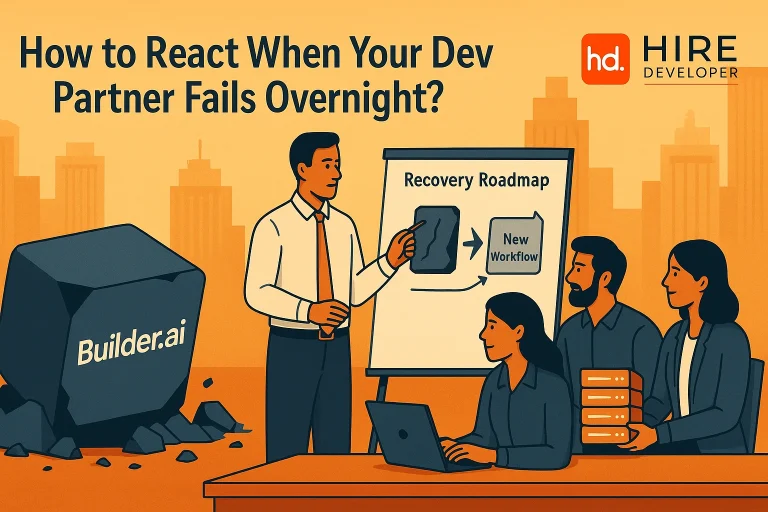
Create a Transition Map: Even If You’re Not Ready to Move
Whether or not you’re switching vendors immediately, map the answers to:
- What’s salvageable?
- Who can continue the work?
- What needs to be told to stakeholders?
- What deadlines are now at risk?
This becomes your recovery blueprint and helps any new team onboard faster, smarter, and cleaner.
Don't Rebuild in Isolation
Here’s what most founders do wrong:
They try to rebuild from the wreckage without external help, burning time and morale.
Instead:
- Get a neutral dev expert or team to review what’s left.
A quick audit can tell you how viable recovery is and whether your tech stack is still worth reviving.
- Look for a partner, not a platform.
What you need now isn’t another dashboard. It’s humans who can untangle, re-stabilise, and rebuild with ownership.
Why Staff Augmentation Wins in Recovery Mode?
When the floor falls out, you don’t want to outsource again, you want to extend your team with professionals you control. That’s where staff augmentation excels:
- You pick who joins your project.
- You manage them directly.
- You keep the code.
- You scale up or down as needed.
With HireDeveloper.Dev, many ex-Builder.ai clients are building fast and freely again, not because we sell them hope, but because we give them a team they command.
This Wasn’t Your Fault, But the Next Step Is Yours
You didn’t choose to be here. But how you move next could define your product’s future. Builder.ai collapsed. You didn’t. You’re still in control if you take the right steps, right now.
We’ve Helped Teams Reboot After Platform Failures!
Turn the setback into a setup. With HireDeveloper.Dev, access top development talent and bring your vision back to life. Contact us today to schedule your appointment.
Related Resources:
- What Happened to Builder.ai? A Breakdown for Startup Founders
- How Builder.AI’s Collapse Shook the Startup World?
- The 5 Stages of Vendor Grief and How to Get Unstuck
- Builder.ai’s Fall: Lessons for Product Owners and CTOs
- Builder.ai Migration Checklist: Save Your Code, Your Time, Your Product
- You Don’t Need to Start Over How to Transfer Your Project Safely
- From Panic to Progress, Real Strategies to Move on from Builder.ai
- Why Moving Fast Now After Builder.ai’s Collapse Will Save You Months Later
- How HireDeveloper.Dev Helps Builder.ai Clients Rebuild with Confidence
- Builder.ai vs. Human-Led Dev Teams: What We’ve Learned
- No More Black Boxes: The Power of Developer Transparency
- AI Was the Hype: Human Execution Is the Reality
- In Crisis, Founders Need More Than Just Tech: They Need Trust
- Why Owning Your Codebase Is Non-Negotiable in 2025
- Avoiding the Next Builder.ai: Red Flags Every Buyer Should Watch For
- From Locked to Liberated: How We Helped Former Builder.ai Clients Reclaim Control
- The Myth of One-Click Apps: Why Custom Always Wins in the Long Run
- What Every Investor Wants to Know: Technical Due Diligence After Builder.ai
- From Recovery to Resilience: A Blueprint for Building Post-Builder.ai