








Not so common introduction
Most companies compare developers based on hourly rates. That is usually the first mistake. Because the real cost of software development is rarely visible in the invoice.
It appears later through: Rework, Missed deadlines, Delayed releases, Unstable delivery, Repeated onboarding, Communication gaps, Management overhead
This is something many founders, CTOs, product managers, and delivery leaders experience only after a project starts slowing down.
At first, freelancers often feel like a faster and cheaper option. And for small one-time tasks, they can absolutely work well. But when products start evolving, the hidden costs begin appearing.
TL; DR (Direct Answer)
Freelancers may look cheaper initially, but the real cost often appears later through: Rework, missed deadlines, Delayed releases, Unstable delivery, Repeated onboarding, Communication gaps, Management overhead
For growing startups, the biggest risk is not higher developer cost.
It’s fragmented execution that slows product momentum.
Dedicated developers reduce this by providing: Long-term continuity, Stable collaboration, Predictable delivery, Stronger product ownership. That’s why many founders, CTOs, and delivery leaders are moving toward dedicated development teams instead of relying heavily on short-term freelance setups.
Also Read: How To Hire Developers That Deliver Results Stepwise
The Real Comparison between a freelancer vs dedicated developer
| Area | Freelancer Setup | Dedicated Developer Setup |
|---|---|---|
| Hiring Speed | Fast initially | Fast with long-term continuity |
| Upfront Cost | Lower | Slightly higher |
| Product Understanding | Limited | Deepens over time |
| Availability | Shared across clients | Focused on your product |
| Communication | Can become inconsistent | Stable daily collaboration |
| Rework Risk | Higher | Lower |
| Delivery Predictability | Unstable over time | More consistent |
| Onboarding Effort | Repeats frequently | Minimal after initial setup |
| Technical Continuity | Often fragmented | Long-term ownership |
| Management Overhead | High for founders/CTOs | Lower operational burden |
| Scalability | Difficult during growth | Easier to expand |
| Best For | Short-term tasks | Long-term product development |
| Hidden Cost | Delays, rework, missed deadlines | Lower execution risk |
Why Freelancers Feel Like the Right Choice Initially
For early-stage startups or growing companies, freelancers solve an immediate problem: Quick hiring, lower upfront cost, flexibility, fast execution for smaller tasks
The first few weeks usually feel productive ->Features are shipped ->The roadmap starts moving ->The team feels optimistic ->Then the product starts to grow ->Requirements change –>New features affect older systems ->Customer feedback changes priorities.
This is where execution becomes more important than simple task completion.
Also Read: Remote Developers Vs Freelancers: Which Is Better In 2026?
The Hidden Cost Nobody Calculates: Rework
One of the biggest hidden expenses in freelance-led development is the need to rebuild existing work.
This usually happens because:
- Systems were built for speed, not scale
- The documentation was incomplete
- Architecture decisions lacked long-term thinking
- The original developer was no longer available
Now another developer has joined the project.
Instead of building new features, they spend weeks:
- Understanding old code
- Fixing unstable logic
- Rewriting modules
- Resolving avoidable issues
The company ends up paying twice for the same feature.
For CTOs, this becomes a technical debt.
For founders, this affects the runway.
For product managers, this destroys the delivery of confidence.
Also Read: Hire Indian Developers: Cost, Quality & Hidden Advantages (2026)
Delayed Releases Become Expensive Quickly
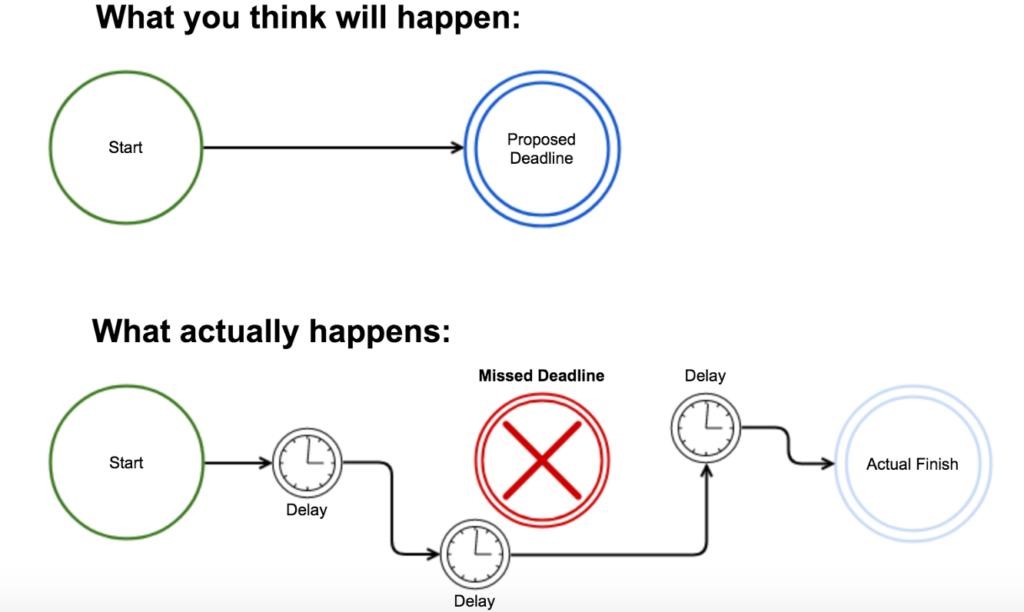
Most software delays do not happen suddenly.
They build gradually.
The project starts hearing:
- Almost done
- Small fixes remaining
- Deployment issue
- Waiting for testing
Meanwhile:
- Launch dates move
- Demos get postponed
- Internal teams lose visibility
- Customers wait longer for features
This is where the actual business cost appears.
Because delayed software affects:
- Revenue timelines
- Investor confidence
- Customer experience
- Go-to-market plans
A lower hourly rate means very little when product momentum slows down.
The Management Cost Most Leaders Ignore
Freelancers often require more coordination as the project grows.
Eventually, someone internally starts managing:
- Follow-ups
- Requirement clarifications
- QA coordination
- Sprint tracking
- Deployment communication
That person is usually:
- The Founder
- The CTO
- The Product Manager
- Or the delivery lead
Now, senior leadership spends time managing execution problems instead of growing the business.
This management overhead becomes one of the highest hidden costs in fragmented development setups.
Why Dedicated Developers Work Differently
Dedicated developers are not temporary contributors working across multiple projects simultaneously.
They work as part of the product team in the long term.
That changes everything.
They operate inside:
- Your sprint cycles
- Your communication workflows
- Your engineering standards
- Your release process
Over time, they understand:
- Product goals
- Feature dependencies
- Customer expectations
- Technical priorities
That continuity improves delivery quality significantly.
Because stable execution compounds over time.
For Founders: The Real Cost Is Lost Momentum
Most founders initially optimize for cheaper development.
But eventually the bigger problem becomes: slower releases, repeated hiring, unstable execution, rebuilding features
Products do not fail because developers are expensive.
Products slow down because execution keeps restarting.
That is the cost many startups underestimate early.
For CTOs: Continuity Reduces Technical Debt
CTOs usually experience the deeper issue first.
Freelance-heavy setups often create: Inconsistent coding standards, weak documentation, dependency on individual developers, architecture fragmentation
Once developers leave, critical product knowledge leaves with them.
Now, engineering teams spend months: Stabilizing systems, cleaning codebases, fixing avoidable issues, rebuilding delivery confidence
Dedicated developers reduce this because they stay aligned with the product long-term.
That continuity improves: Engineering consistency, release stability, scalability, and collaboration quality.
For Product Managers & Delivery Heads: Predictability Matters More Than Speed
Fast delivery means very little, as timelines constantly shift.
Product and delivery teams need: Predictable sprint velocity, stable communication, roadmap visibility, and reliable releases
Freelance-heavy teams often create uncertainty because product ownership becomes fragmented.
Dedicated developers improve execution because they stay connected to the roadmap continuously.
That context improves: Planning accuracy, Delivery consistency, stakeholder confidence, and release predictability
Not your regular bottom line
If your roadmap keeps slowing down despite hiring more developers, the problem may not be execution speed.
It may be the lack of long-term ownership and accountability within the team.
Growing products need developers who do more than complete tasks.
They need people who stay aligned with the roadmap, keep an eye on the bigger picture, and take responsibility for delivery outcomes end to end.