






What Is Vibe Coding?
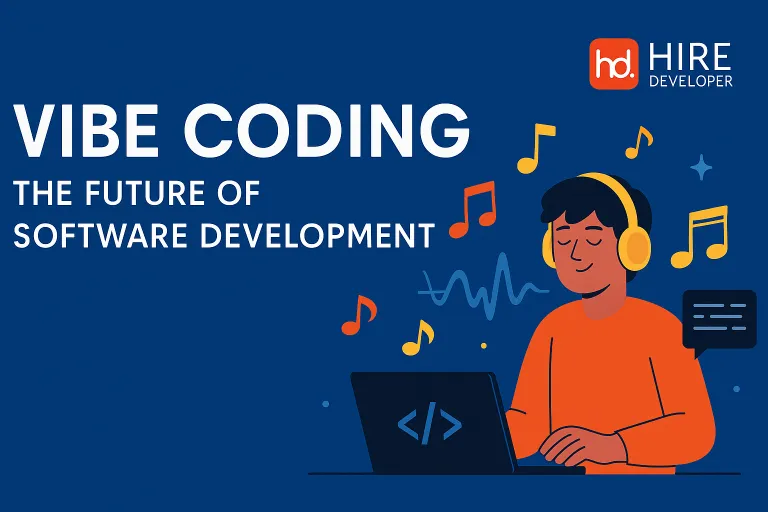
Vibe coding is a programming approach where human intentions are expressed in plain language, and AI systems powered by Large Language Models (LLMs) interpret these prompts and produce working code.
Unlike conventional development workflows where every logic step is manually defined, vibe coding shifts the developer’s role from coder to orchestrator. The human defines what needs to be done, while the AI figures out how to do it.
It’s coding but with vibes.
This declarative, conversational style of programming democratizes development. Whether you’re a senior engineer or a curious founder with zero experience, tools like Cursor, Claude Code, and Continue can help you build functioning software just by talking to your computer.
2026 Flash Update: From “Vibe Coding Magic” to Vibe Engineering
From Assistant to Swarm: We’ve moved past one-on-one chats. Vibe Engineering uses Agentic Swarms, automated teams where specialized agents (Architect, Dev, Security, QA) argue and refine code before you see it.
Contextual Memory (MCP): AI now uses Model Context Protocols to “remember” your entire project history, Slack decisions, and legacy debt, eliminating the hallucinations of 2025.
Verifiable Vibes: To prevent “vibe-induced” outages, 2026 workflows include Formal Verification Agents that mathematically prove code correctness before deployment.
The Skillset Pivot
Architectural Literacy: You don’t need to write the loop, but you must understand the System Design to guide the swarm.
Intent Precision: The new “coding” is the ability to communicate nuance and “taste” in a way that AI can architect accurately.
2026 Bottom Line: Vibe Coding builds prototypes; Vibe Engineering builds empires. The magic is gone; the mastery has arrived.
The Tools That Make Vibe Coding Possible
At Hiredeveloper.dev™, we’ve extensively tested dozens of AI-powered tools and platforms across the vibe coding spectrum. Here’s a categorized breakdown of the most promising tools for 2025:
Full Stack App Builders
1. Tempo Labs
Tempo is ideal for low-code and intermediate users. It generates:
- Product Requirement Documents (PRDs)
- User journey diagrams
- Backend logic and authentication via Supabase or Convex
It also supports Stripe and Polar for payments and now allows importing GitHub repos (though with some bugs).
2. Bolt.new (by Stackblitz)
Bolt lets users convert Figma designs into code and open full-stack apps inside a browser-based VS Code. Supabase integration is present, but it lacks native payment support.
3. Lovable.dev
Probably the most user-friendly for non-coders. Lovable supports:
- Visual UI edits via prompts
- GitHub sync (with automatic pulls from your repo)
- Authentication and database ops via Supabase
Honorable Mentions:
- Replit: Fast build-and-deploy cycle in one interface
- Base44: Lean templates targeting advanced developers
VS Code Forks
1. Cursor
A trailblazer in the vibe coding space. Offers chat and agent modes, supports MCP (Modular Code Plugins), but can become complex in large projects due to context file management.
2. Windsurf
Cleaner UX than Cursor with live app previews and similar features. Slightly less flexible in large-team workflows.
3. Trae (from TikTok)
Great UI and generous free tier. Lacks MCP support and deep context tracking, making it less suitable for large or long-term codebases.
VS Code Extensions
1. Continue
Feature-rich with:
- Chat and agent modes
- Full project indexing
- Integration with Firecrawl, Brave Search, and more
2. Augment
Good for code Q&A and completions. No agentic automation. Free tier uses your code for model training.
3. Cline
Great for task automation and predictive assistance. Offers component-aware UI editing. It’s efficient but token hungry.
4. Sourcegraph + Cody
A heavyweight for professional developers. Cody integrates tightly with Sourcegraph, offering:
- Cross-repo context
- Batch editing
- Enterprise-grade code search
Standalone Tools
1. Devin (Cognition Labs)
A Slack-based “autonomous developer.” Can plan, implement, debug, and test with limited input. Best suited for solo devs or startups.
2. Aider
Terminal-based and Git-integrated. Great for consistent refactoring and command-line productivity.
3. Claude Code
A memory-aware terminal tool by Anthropic. Expensive to run (high token cost), but exceptional in managing scoped development over multiple sessions.
Day 0 vs. Day 1+ Coding
Vibe coding shines in what we call “Day 0” development getting ideas off the ground fast. But as projects grow, you’ll need better context management, version control, and team coordination.
This is where hybrid approaches excel: combining vibe coding with traditional software engineering practices. Tools like Sourcegraph, Continue, and Claude Code are starting to bridge the gap between experimental AI coding and reliable enterprise-scale development.
Final Thoughts: Vibe On
The software development landscape is undergoing a radical transformation.
AI agents can now generate, debug, refactor, and deploy code often faster and more reliably than humans in short iterations. But the real magic happens when developers understand how to collaborate with these systems.
At Hiredeveloper.dev™, we’re already helping teams adopt vibe coding workflows, train AI assistants on internal codebases, and explore how AI can serve as more than just a co-pilot but a true development partner.
If you haven’t tried vibe coding yet, now is the time.
Because your next great idea?
It might be just one sentence away.