







Why Software Development Outsourcing Is a Strategic Move in 2026
The global tech landscape in 2026 is no longer driven by cost alone. Companies are shifting towards value, speed, and scalability. With AI, cloud-native systems, and distributed teams becoming the norm, businesses are increasingly relying on software development outsourcing to stay competitive.
Today, when companies plan to hire offshore developers, they are not just looking for cheaper resources. They are looking for partners who can contribute to product growth, innovation, and long-term scalability.
This shift is important.
Because hiring the wrong team is no longer just a delay. It directly impacts your product quality, funding timelines, and market position.
If you are still figuring out the complete hiring process, you can explore this detailed framework on how to hire developers effectively:
How to Choose the Right Country for Hiring Developers
Choosing the right country is not about picking the cheapest option. It is about aligning your business needs with the strengths of a particular region.
When you decide to hire offshore developers, you should evaluate:
- Technical expertise availability
- Communication and English proficiency
- Time zone compatibility
- Cost versus productivity
- Scalability of talent
Companies that fail to evaluate these factors often end up spending more on rework, delays, and team restructuring.
Navigating Software Development Outsourcing: Why Geography Matters in 2026
The global tech landscape of 2026 is no longer about finding the “cheapest” coder. According to Deloitte’s 2026 Global Software Industry Outlook, the focus has shifted to “AI-First Engineering.” This means companies are now searching for “Value-per-pixel” and talent that can manage a “silicon-based workforce” (AI agents).
This shift has transformed software development outsourcing from a mere cost-cutting tactic into a high-stakes strategic move. As Gartner’s 2026 Strategic Trends report highlights, “Talent Density” is now the #1 differentiator. If you want to hire developers that deliver results, you need more than just a resume; you need technical foresight and domain-specific expertise
The 2026 Global Developer Comparison Matrix: Core Strengths & Rates
| Country | Avg. Hourly Rate (Sr. Dev) | Primary Tech Strength | English Proficiency | Timezone Sync (EST/GMT) |
|---|---|---|---|---|
| India | $25 – $55 | AI, Full-Stack, Cloud-Native | Very High | +9.5 hrs (EST) / +5.5 (GMT) |
| Poland | $50 – $90 | Cybersecurity, Fintech, Java | High | +6 hrs (EST) / +1 (GMT) |
| Ukraine | $45 – $80 | Backend, Big Data, GenAI | Medium-High | +7 hrs (EST) / +2 (GMT) |
| Brazil | $45 – $75 | Mobile (React Native/Flutter) | Medium | -1 to +2 hrs (EST) |
| Vietnam | $20 – $45 | Game Dev, Web3, Blockchain | Low-Medium | +12 hrs (EST) |
| Mexico | $40 – $70 | Enterprise Java, .NET Core | High | 0 to +1 hrs (EST) |
Why " Talent Density" is the New ROI (Based on Gartner 2026)
In the past, companies hired 10 average developers. In 2026, the winning strategy is Talent Density hiring 2 elite developers who use AI tools to outperform a team of 10.
HireDeveloper.dev is built on this exact principle. We don’t just help you hire remote software developers in 3 days; we ensure they have the “High Talent Density” that Gartner recommends for 2026.
Top 10 Countries To hire Developers in 2026
🇮🇳 India: The Global Leader in Scale and Cost Efficiency
India continues to dominate the global outsourcing market. It is the most preferred destination for companies looking to hire dedicated developers at scale.
With millions of developers and strong expertise in AI, SaaS, and cloud technologies, India offers unmatched flexibility.
Businesses that hire offshore developers from India benefit from:
- Large talent pool
- Cost efficiency
- Strong technical skills
- Fast team scaling
If you want to explore hiring from India in detail, check this guide:
You can also directly explore pre-vetted developers here:
🇵🇱 Poland: High-Quality Engineering Talent
Poland is known for strong backend engineering and cybersecurity expertise. It is ideal for companies building complex systems.
However, the cost is higher compared to Asian markets.
🇺🇦 Ukraine: Strong Backend and AI Capabilities
Ukraine remains a strong outsourcing hub despite global challenges. It offers skilled developers in AI, data science, and backend systems.
🇧🇷 Brazil: Best for Time Zone Alignment
Brazil is a top choice for US-based companies. It allows real-time collaboration, which improves communication and delivery speed.
🇻🇳 Vietnam: Cost-Effective Development Hub
Vietnam is growing rapidly in web and mobile development. It is suitable for startups with limited budgets.
🇲🇽 Mexico: Nearshore Advantage for US Companies
Mexico offers a perfect balance between cost and collaboration. It is ideal for companies that need daily communication.
🇷🇴 Romania: Emerging European Tech Hub
Romania is becoming popular for fintech and enterprise applications.
🇵🇭 Philippines: Strong Communication Skills
Best suited for support roles, frontend tasks, and maintenance work.
🇪🇬 Egypt: Growing Outsourcing Market
Egypt is gaining traction due to affordable rates and improving developer quality.
🇦🇷 Argentina: Premium Talent with Time Zone Benefits
Argentina offers high-quality developers but at relatively higher costs.
The Real Cost of Hiring Offshore Developers
Most companies make one critical mistake.
They only look at hourly rates.
But the real cost of software development outsourcing includes:
- Onboarding time
- Communication delays
- Rework due to poor quality
- Project management overhead
- Developer replacement cost
For example:
A freelancer charging $25 per hour may seem cheap.
But if 30 percent of the work requires rework, your actual cost becomes significantly higher.
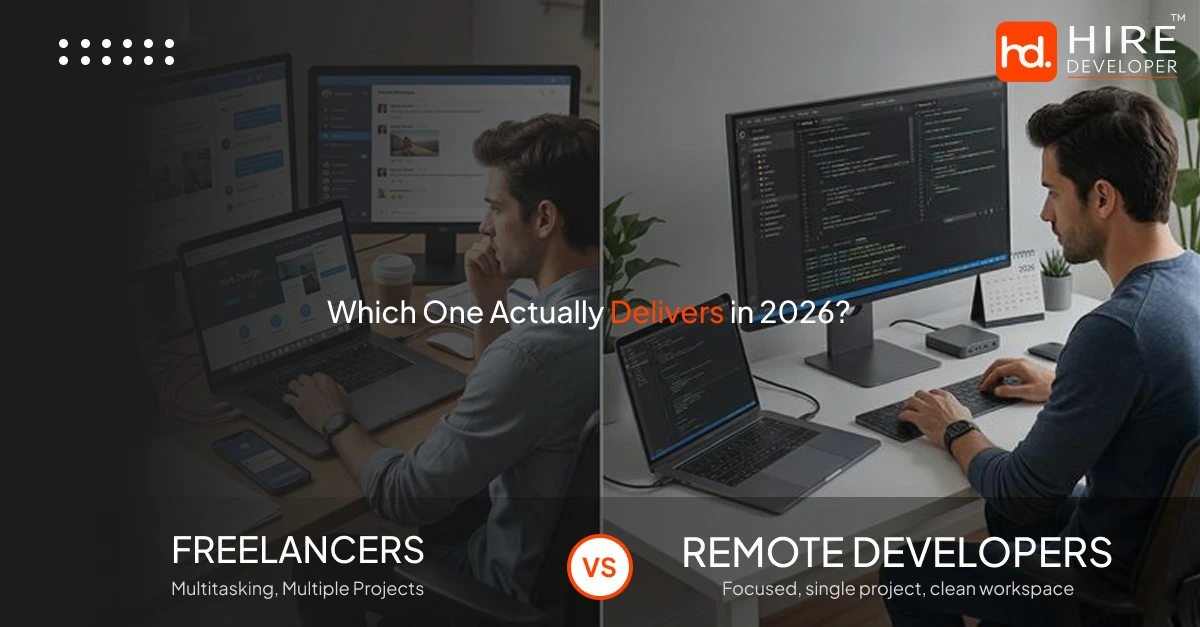
This is why many companies prefer structured hiring models instead of relying only on freelancers.
Hiring Models You Must Understand Before Choosing a Country
Before you decide where to hire from, you must decide how to hire.
There are three major models:
Freelancers
Best for short-term tasks.
High risk for long-term projects.
Dedicated Developers
Best for scalability and long-term growth.
Most companies prefer to hire dedicated developers for core product development.
You can explore the full comparison here:
Agencies
Best for full outsourcing.
Higher cost and less flexibility.
How to Hire Offshore Developers Without Risk
If you want to successfully hire offshore developers, follow a structured process:
Start by defining your actual business problem, not just the tech stack.
Then shortlist candidates based on real-world experience instead of resumes.
Always conduct technical assessments and assign trial tasks.
Avoid long-term commitments initially. Start with a short sprint.
If you want a faster approach, you can hire remote developers in just a few days:
For a complete breakdown, explore this remote hiring guide:
Real-World Insight Most Companies Miss
Most businesses think outsourcing is about saving money.
But in reality:
Cheap hiring leads to expensive mistakes.
Projects get delayed.
Code quality drops.
Scaling becomes difficult.
The smartest companies focus on:
- Long-term value
- Team reliability
- Product scalability
That is why they choose to hire dedicated developers instead of constantly switching freelancers.
The Future of Software Development Outsourcing,/span>
In 2026 and beyond, outsourcing is evolving.
AI-driven hiring, performance tracking, and global collaboration tools are changing how companies build teams.
The focus is shifting from:
Cheap developers → Reliable development partners
Companies that adapt to this shift will build faster, scale better, and dominate their markets.
Here Is The Conclusion Of This Problem
Choosing the best country to hire developers is not just a tactical decision. It is a strategic one.
Whether you choose India for scalability, Eastern Europe for engineering quality, or Latin America for time zone alignment, the goal remains the same.
Build a team that delivers results.
If you approach software development outsourcing with the right strategy, it becomes your biggest competitive advantage.